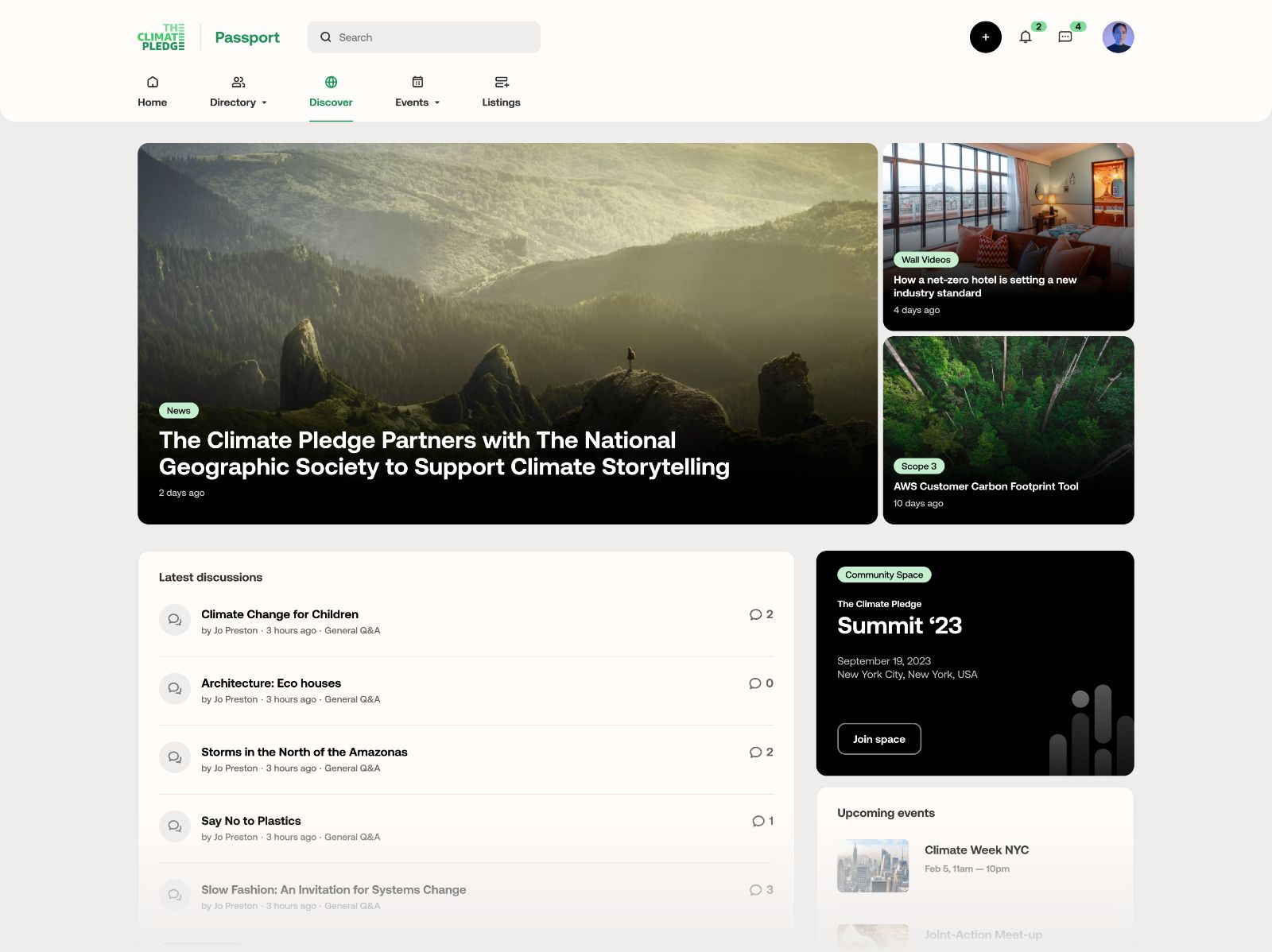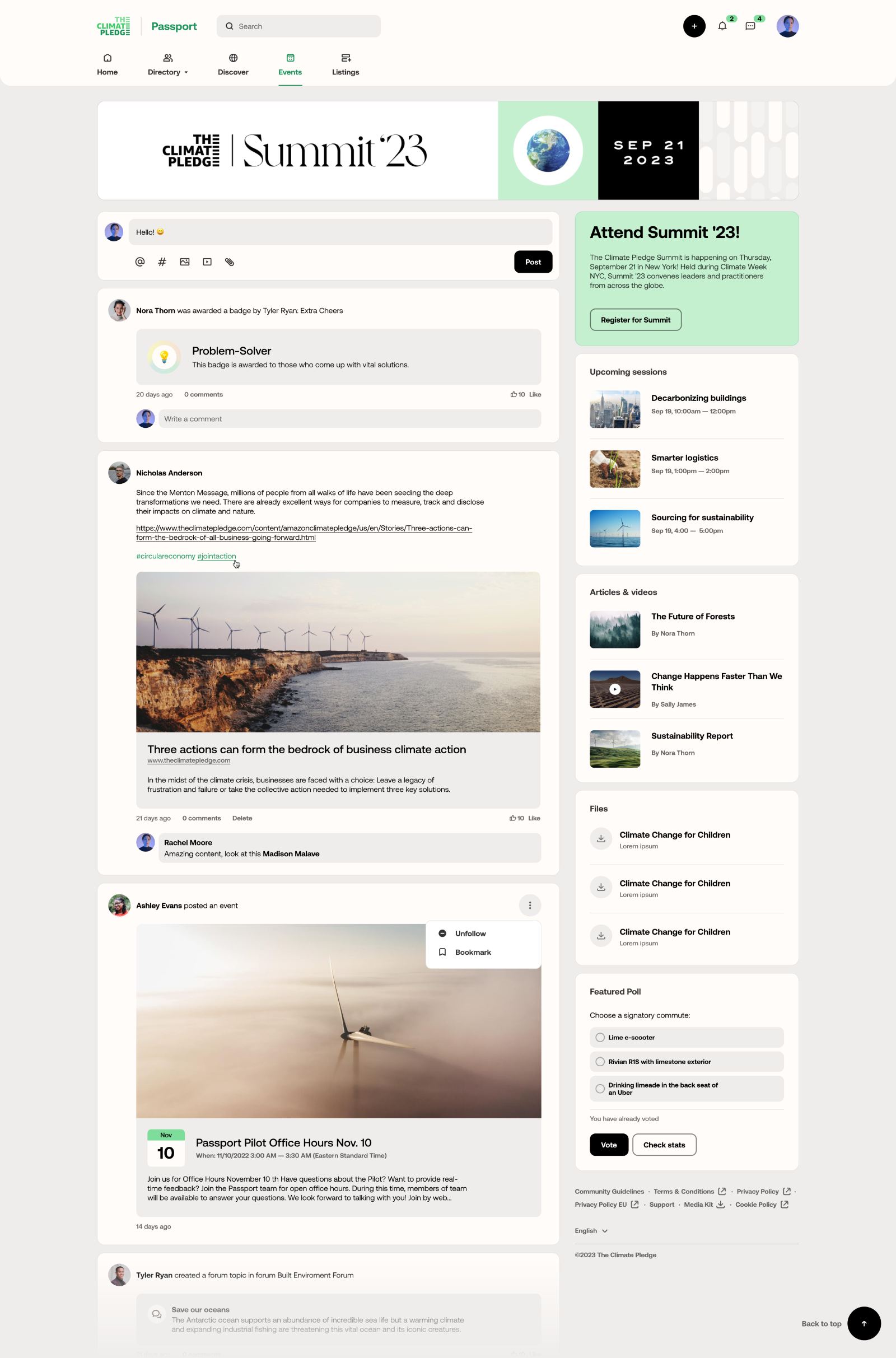
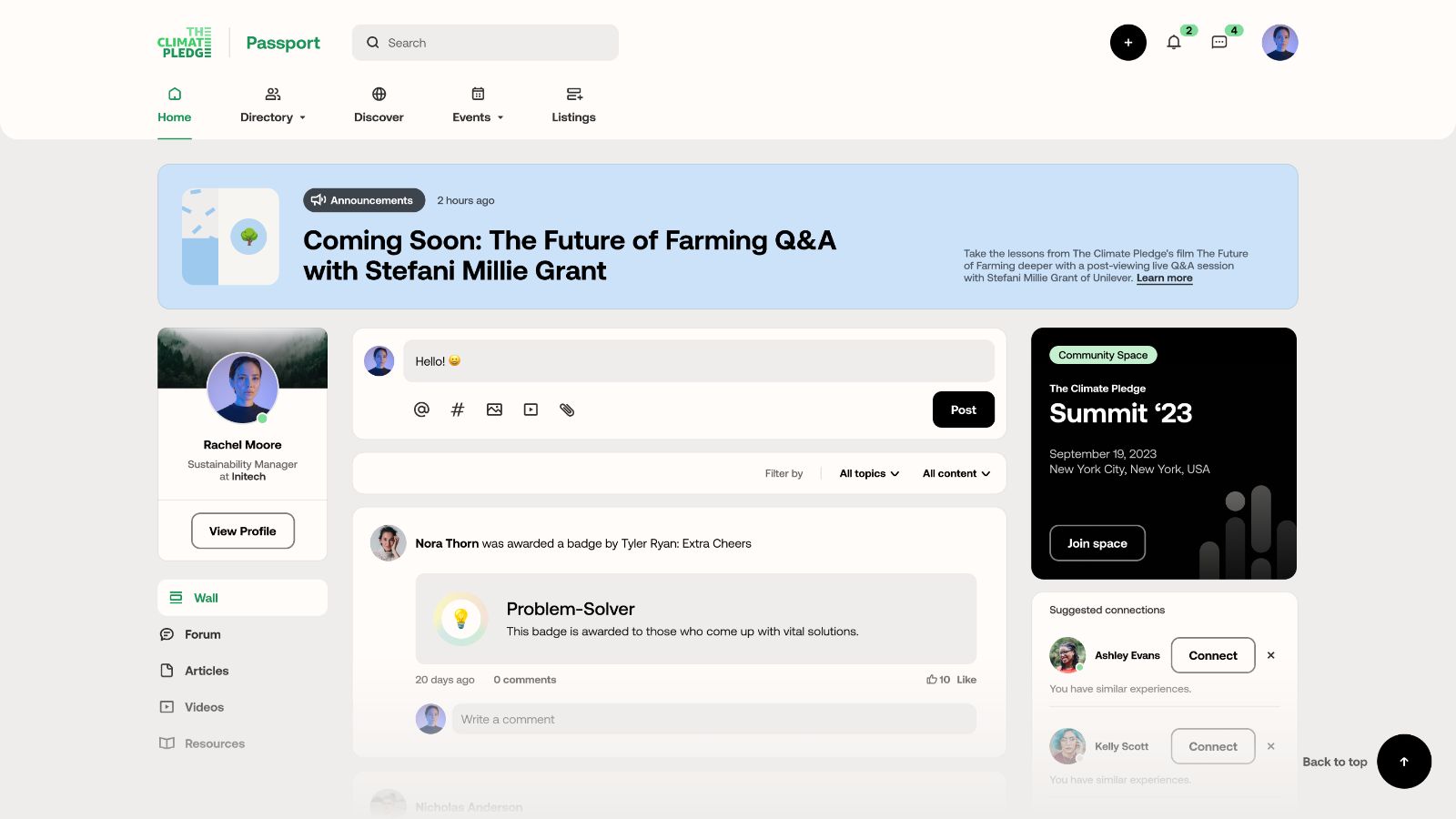
The Climate Pledge is an Amazon-led initiative asking large companies to commit to net-zero carbon by 2040 — ten years ahead of the Paris Agreement. Passport was TCP's private community platform for those signatories: a space to interact, share progress, and collaborate on joint climate action.
The platform ran on Axero — a third-party enterprise social tool we inherited, not chose. Our job was to make it feel like TCP built it themselves, while working within what the system would allow.
Before designing anything, we audited what was broken
The platform was live but underperforming. We didn't touch a single screen until we knew exactly what was wrong.
Before any new design, we ran a full accessibility audit against WCAG 2.2 AA across two production templates — mapping every issue by severity and WCAG criterion.
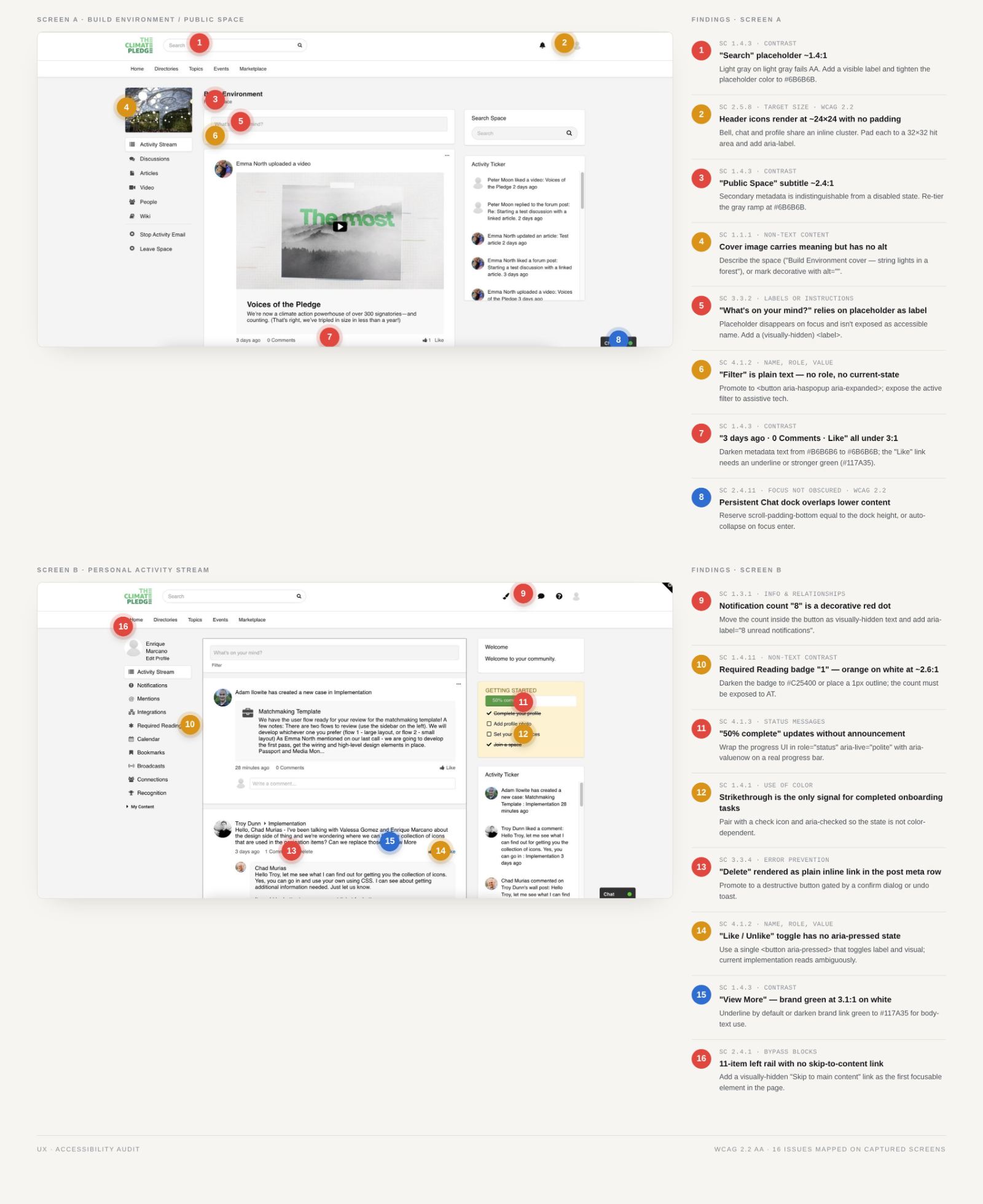
Each issue had a specific conformity criterion, a severity level, and a concrete fix recommendation. That document became the baseline for every conversation with Teleion: not "there are accessibility problems" but "SC 1.4.3 fails here, the fix is this, it needs to resolve before we design on top of it."
In the US, WCAG compliance carries legal liability under the ADA. For an Amazon initiative, zero tolerance wasn't a preference — it was a requirement. So we integrated accessibility analysis into the workflow from that point on: every new component went through contrast checks, focus state review, screen reader label verification, and keyboard navigability before handoff. Not as a final check — as part of the design.
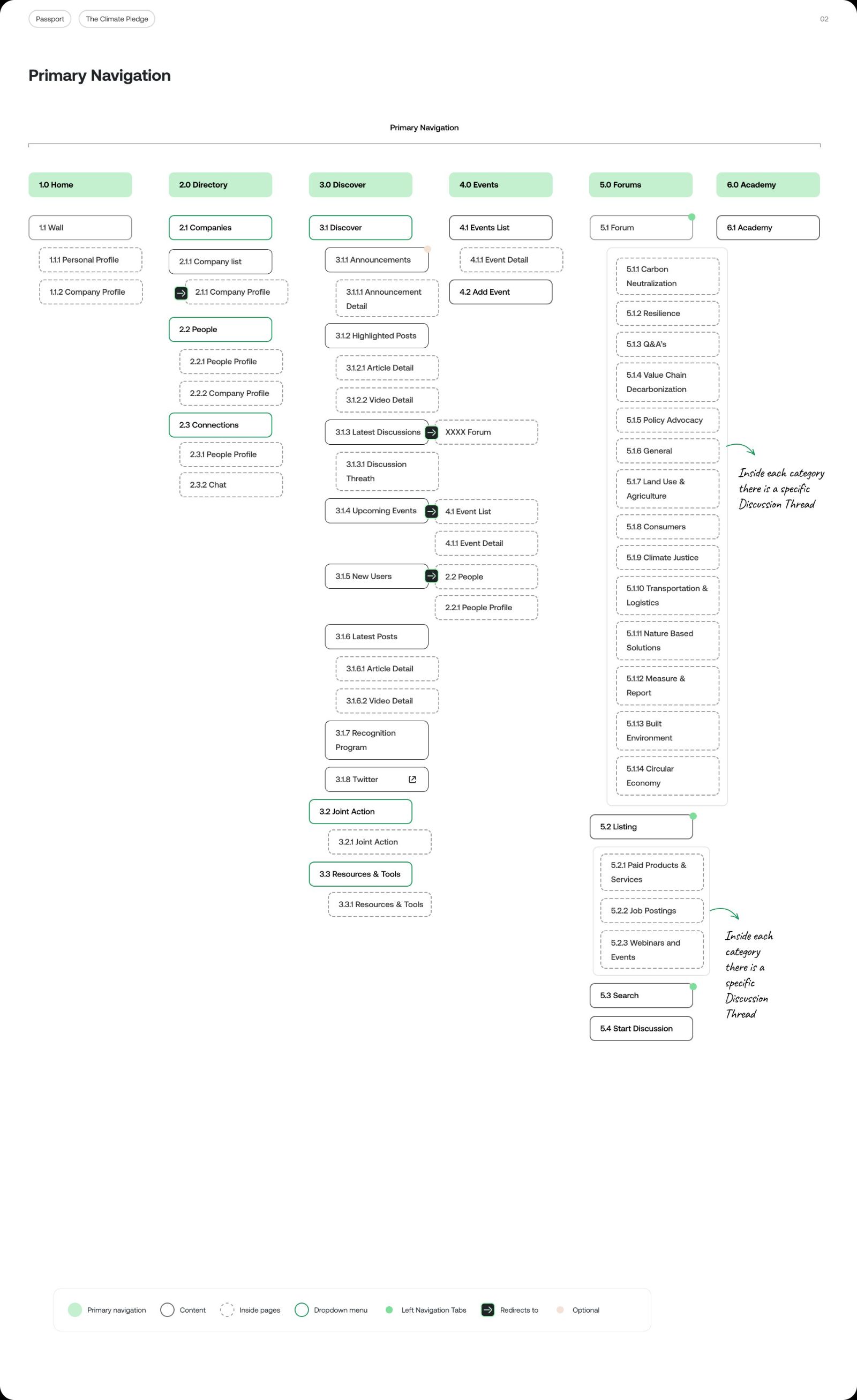
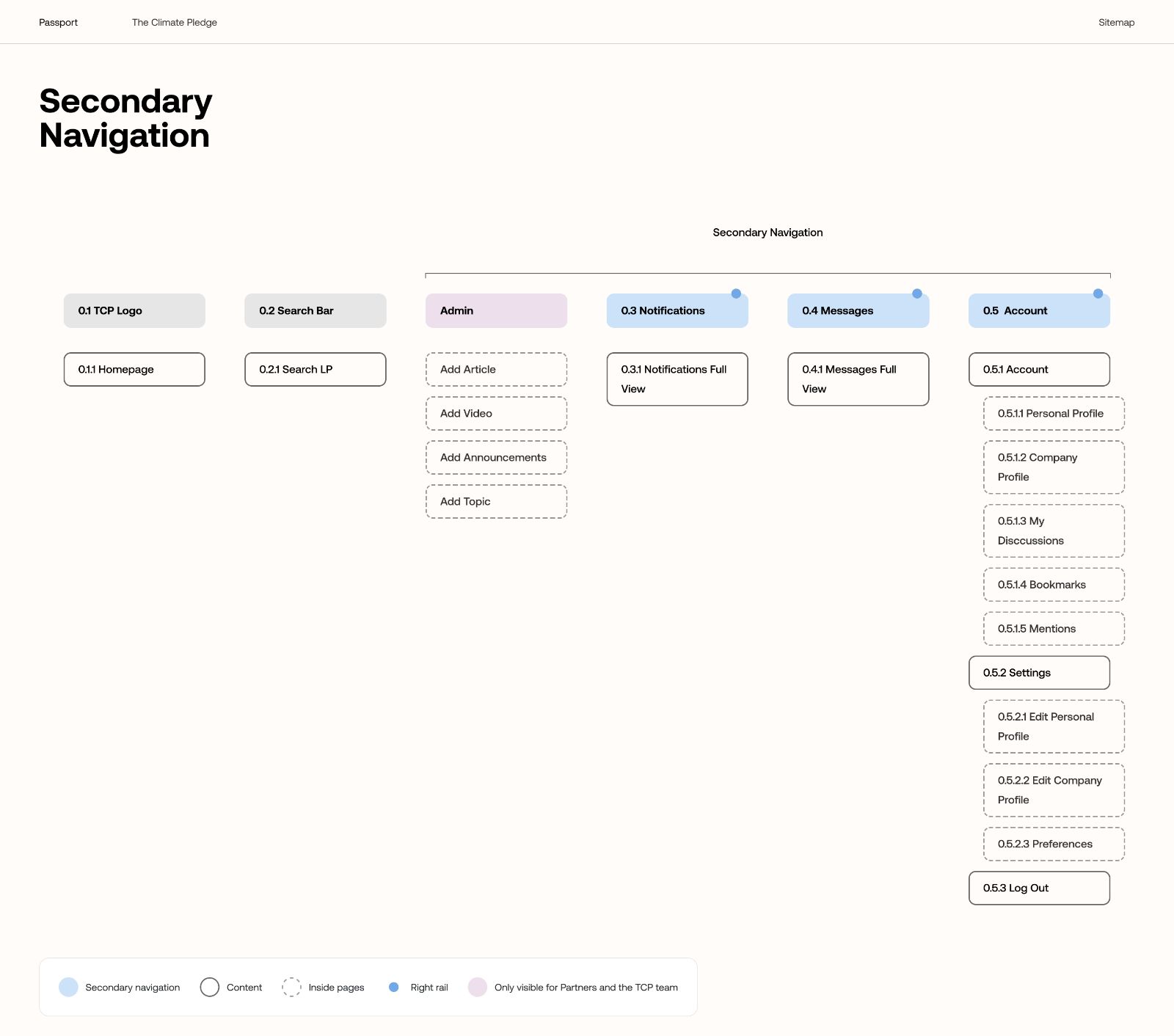
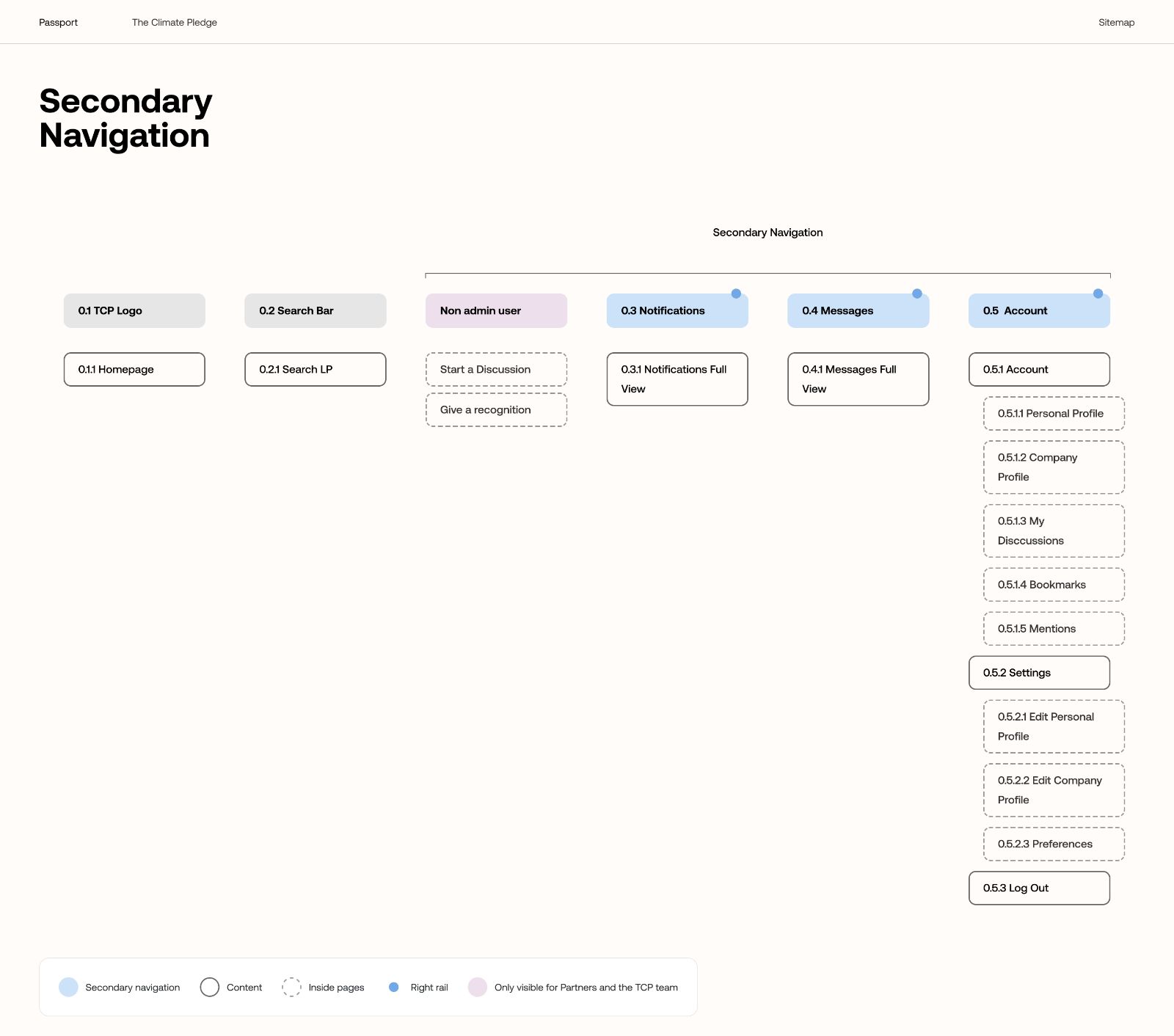
We ran the same audit methodology on the navigation — mapping the full sitemap to identify where the structure was failing users.
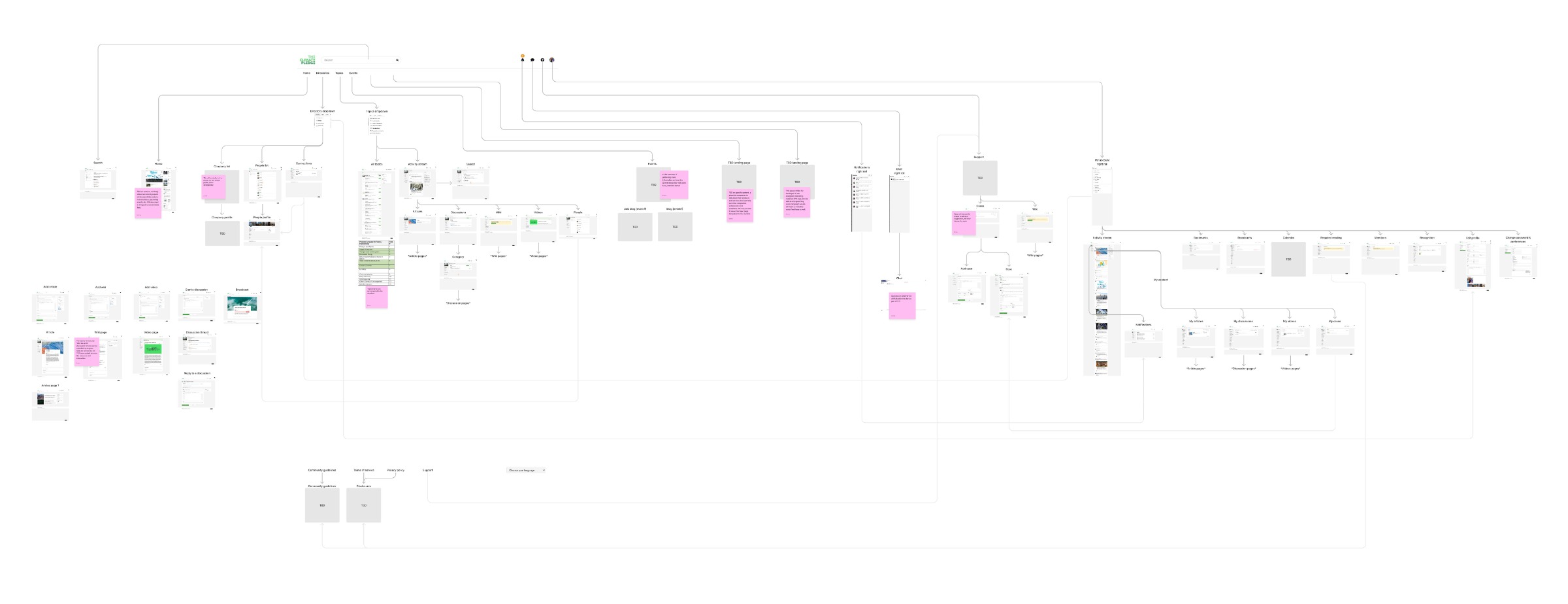
What the navigation audit revealed
Three structural problems ran through the entire platform.
No hierarchy.
The homepage used a left navigation that competed with the primary nav, hiding content instead of surfacing it. Important sections weren't visible at first glance.
No orientation.
Active states never updated as users moved through sections. Breadcrumbs existed but were broken — linking to wrong pages, showing incorrect paths, or leading to dead ends with no way back.
No consistent user paths.
Cross-linking produced unexpected results. Search returned results without context for where they lived in the site.
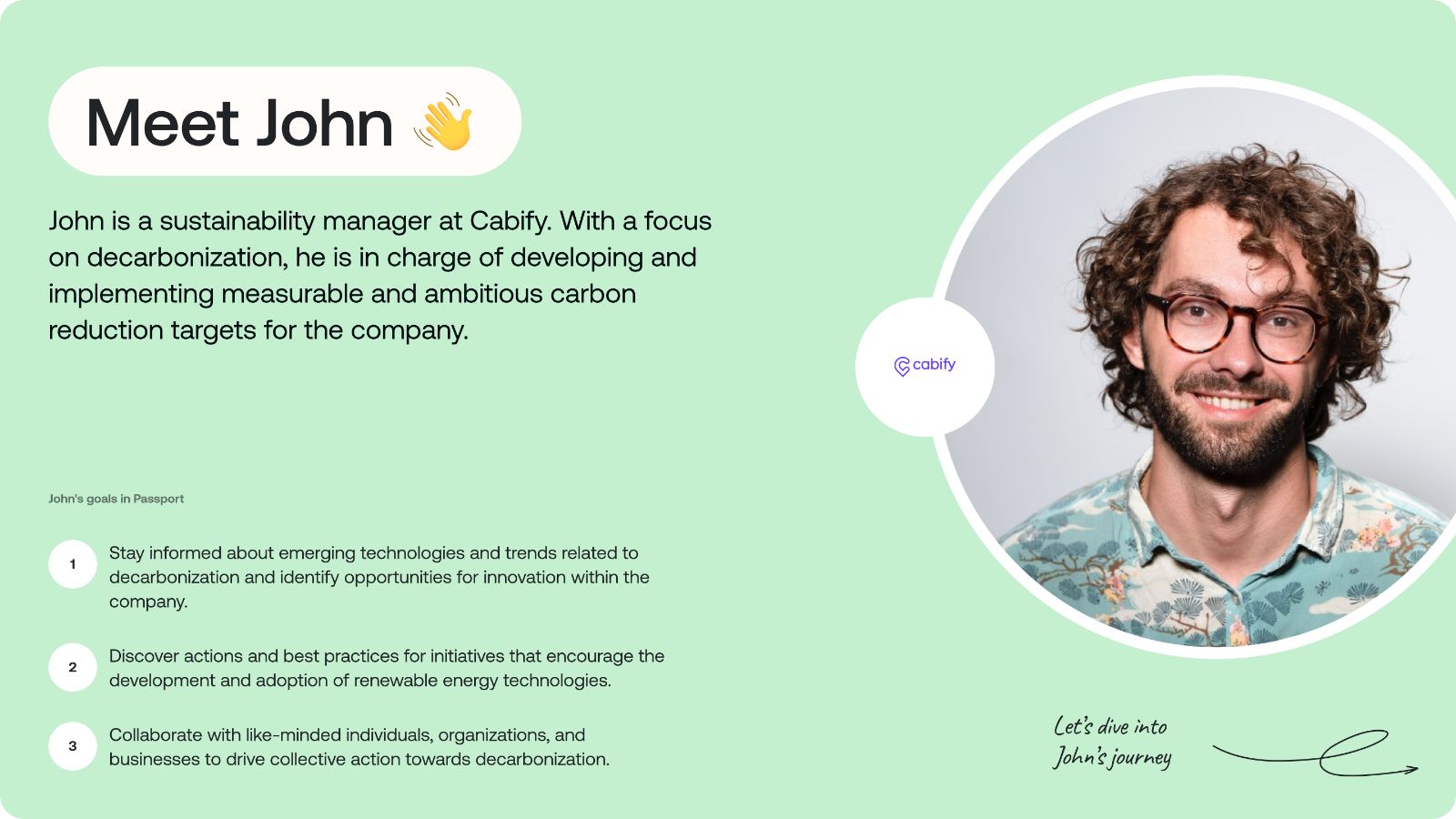
To make the problem concrete for TCP, we mapped a user journey. John, a sustainability manager at Cabify, arrives looking for decarbonization content.
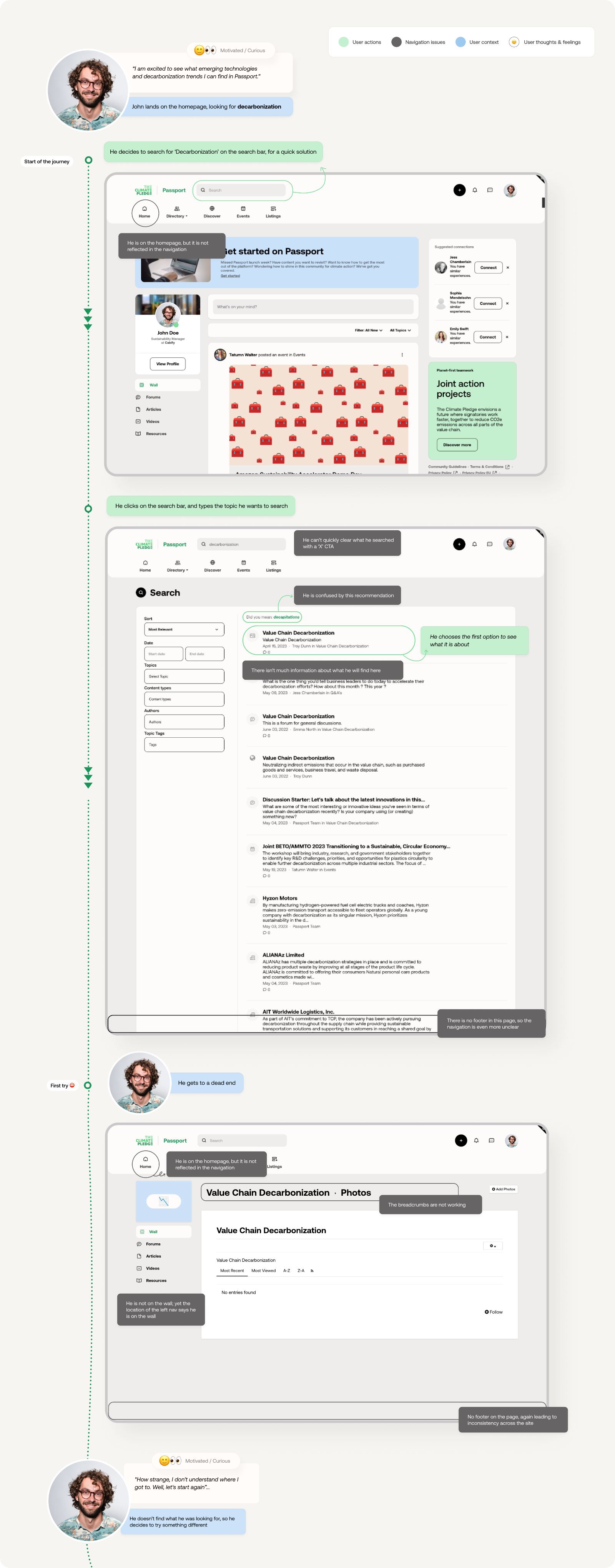
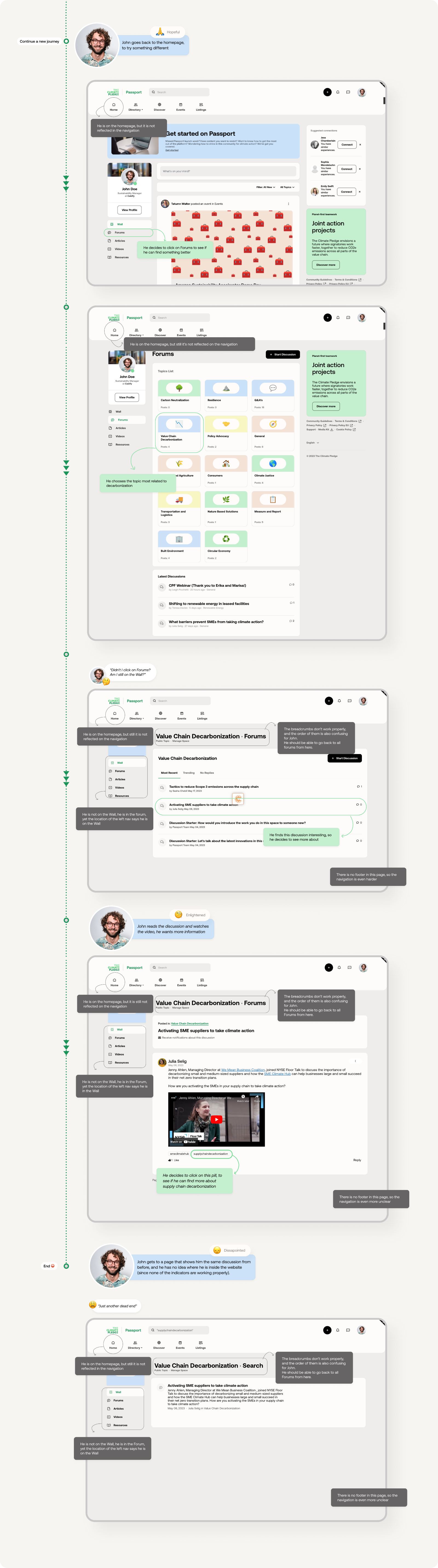
The behavioral data confirmed it. The most-used actions were login, view, and update profile — passive behaviors. Start a discussion, explore forums, post content: barely used. The navigation was actively suppressing the community behaviors the platform existed to create.